
How to Reduce Returns When Sourcing Pet Carriers and Car Seat Covers
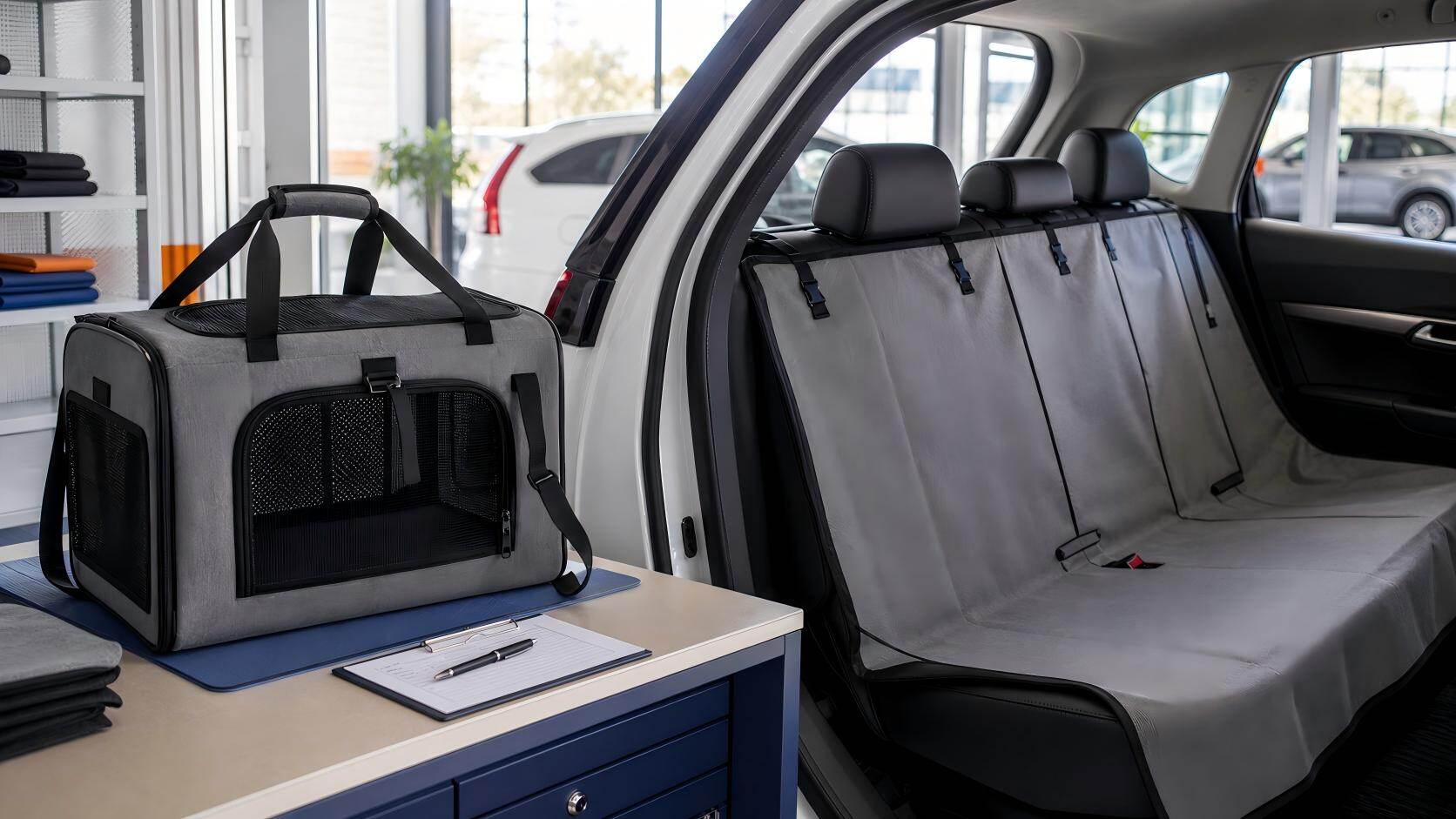
Learn how B2B buyers can reduce returns on pet carriers and car seat covers through sizing, materials, fit, samples, and packaging checks
Returns are expensive for every part of the supply chain. For a retailer, they create reverse-logistics costs, customer-service workload, negative reviews, and lost shelf or advertising efficiency. For a supplier, they often start with a small mismatch that was not clarified early enough: the wrong size range, an unsuitable fixing method, a fabric that is difficult to clean, or packaging that does not explain how the product should be used.
The good news is that many pet travel product returns are preventable. A structured sourcing review gives buyers a clearer way to compare suppliers, approve samples, and launch a collection with fewer surprises.
1. Start with the customer use case, not only the product name
“Pet carrier” and “car seat cover” are broad product terms. The right specification depends on the actual use case: short urban trips, road travel, public transport, cycling, airline travel, or everyday movement between home and a vehicle. A product that performs well in one scenario may not be suitable for another.
Before asking for a quote, define the buyer and the pet profile you want to serve:
· Expected pet size and weight range, including the usable interior space rather than only the external dimensions.
· Main transport scenario: rear-seat travel, carrier carry, trolley use, bicycle use, or airline-oriented travel.
· Customer expectations for ventilation, storage, cleanability, folding, portability, and visual style.
· Retail channel requirements, such as shelf packaging, ecommerce photography, carton dimensions, and selling points that can be explained quickly.
For a starting assortment, review the Pet Travel Gear collection and compare products by use case instead of treating every carrier as interchangeable.
2. Check dimensions in the way customers will use them
Dimension-related returns usually happen because the buyer sees a product that looks large enough in a photo but is smaller inside, or because the product is recommended for a pet size without explaining how to measure the pet. Product pages and packaging should make the measurement process easy.
· Show external dimensions and usable internal dimensions where relevant.
· Explain how the customer should measure the pet: standing length, shoulder height, and body width are more useful than weight alone.
· Clarify whether the product is designed for small dogs, cats, or a wider range, and avoid vague phrases such as ‘fits all pets.’
· For car seat covers, state the intended seat configuration and show how the cover attaches to headrests, seat gaps, or side panels.
3. Evaluate the construction details that affect daily use
A buyer does not need a complicated laboratory report to identify many return risks. A careful sample review can reveal whether the product is practical for the end customer and stable enough for retail handling.
For pet carriers
· Mesh panels should provide ventilation while remaining securely attached to the surrounding fabric.
· Zippers should run smoothly and be protected from snagging during normal opening and closing.
· Handles, shoulder straps, buckles, and safety tethers should be positioned logically and reinforced at stress points.
· The base should stay reasonably stable when carried or placed on a vehicle seat.
For car seat covers
· The cover should match the seat shape and include practical fixing points so it does not shift easily during normal vehicle movement.
· Fabric should be easy to wipe or clean, with seams and edges finished consistently.
· Side flaps, openings, and seat-belt access should be evaluated against the vehicle types the product targets.
· The product should be simple enough for a customer to install without needing technical instructions.
Relevant examples can be reviewed in the pet carrier category and the pet car seat cover category.
4. Use samples to test the retail promise
A sample is not only for approving color. It is the buyer’s opportunity to test the claims that will appear on the product page, packaging, and sales materials. Keep the test simple and repeatable so the supplier can act on the feedback.
· Test the product with the intended size range and record where the pet can sit, turn, or lie down comfortably.
· Install and remove the product several times to check whether the instructions are clear and the fixing points remain practical.
· Open and close zippers, adjust straps, and inspect stress areas after repeated use.
· Check cleaning instructions and whether the finished product still looks acceptable after wiping or light washing where applicable.
· Review the retail packaging: product name, key dimensions, use case, material information, and images should be consistent with the sample.
For a product-level reference, see the Waterproof Dog Car Seat Cover with Mesh Window.
5. Reduce ambiguity before approving bulk production
Many quality disputes are specification disputes in disguise. The supplier produced what was understood, while the buyer expected something slightly different. A short approval record can protect both sides.
· Approved sample or reference version, with clear photos of important details.
· Confirmed dimensions, material composition, color, accessories, logo or label placement, and packaging format.
· Agreed inspection points for stitching, mesh, zippers, straps, hardware, cleanliness, and carton condition.
· A clear process for handling changes: no material or construction substitution without buyer approval.
6. Work with a supplier that can discuss the whole product system
For retailers and brand owners, the best sourcing conversation is rarely only about unit price. It should cover product fit, sampling, packaging, quality checkpoints, and the next buying decision. A manufacturer that can review the collection as a group can also help avoid overlapping SKUs and inconsistent customer expectations.
JTPAWS and Doublefly Industry support pet product buyers with pet travel products, product sampling, OEM/ODM discussions, retail-oriented packaging coordination, and practical product recommendations. Exact specifications, order quantities, and production terms should be confirmed against the buyer’s target market and project brief.
A short pre-order checklist
· Do we know exactly who will use the product and in which transport scenario?
· Are usable dimensions and measurement instructions clear?
· Have we tested the sample beyond visual approval?
· Are the installation, cleaning, and packaging instructions retail-ready?
· Are the approval points documented before bulk production?
Related Products & Categories
Explore Categories
Recommended Products
Interested in custom manufacturing?